“Learn to Predict Football Matches in 2026 – Data, Odds & Expert Tips”
Sat, 1st Aug, 2026
“Learn to Predict Football Matches in 2026 – Data, Odds & Expert Tips”
Brought to you by SOCCERSTRIVE. Written by Bisong J. Akan
“Learn how to predict football matches in 2026 using team form, player stats, tactical analysis, and AI‑driven odds. Soccer Strive delivers expert tips and strategies.” tips analysis, and betting predictions.
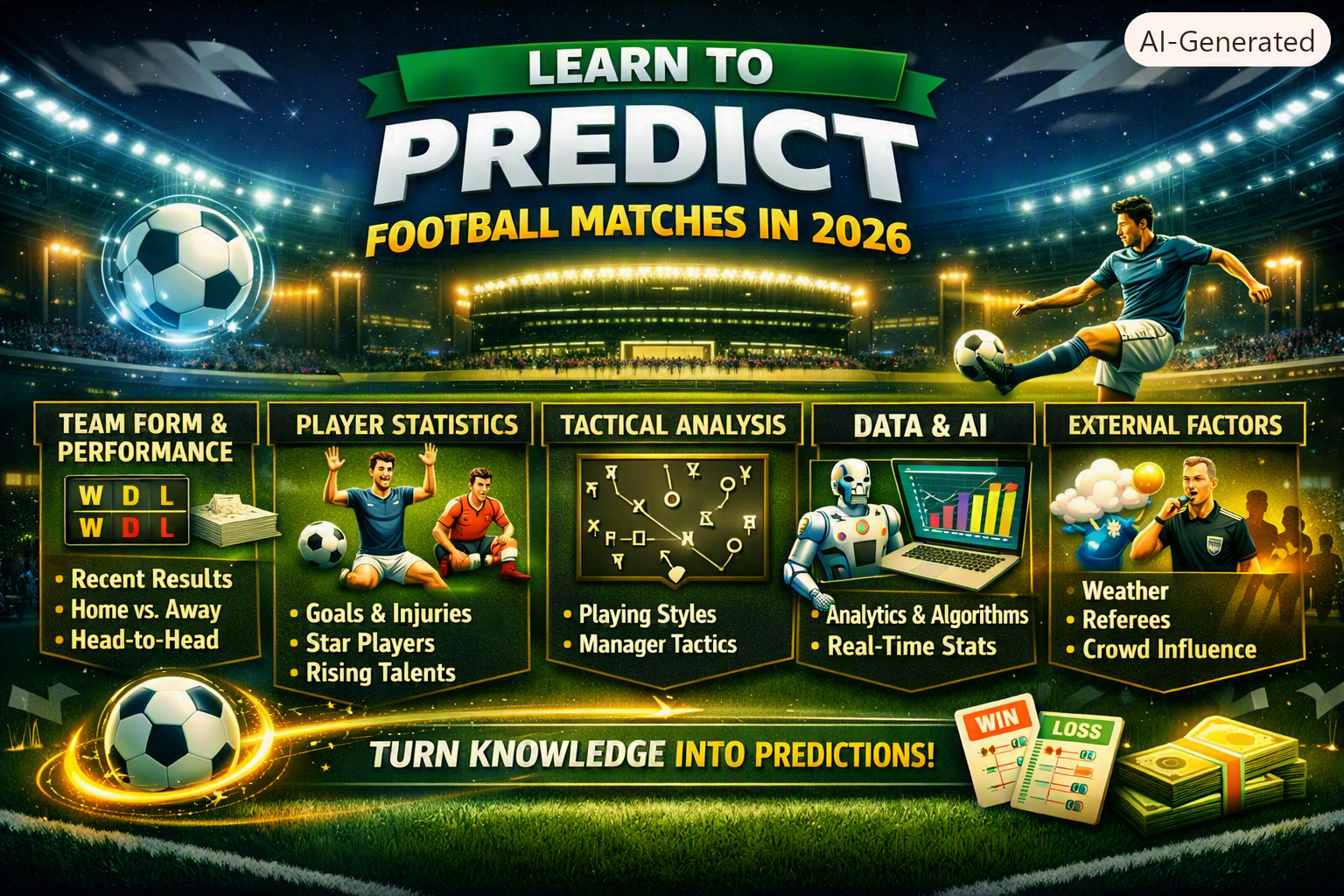
Football has always been unpredictable — a single goal, a referee’s decision, or even the weather can change the outcome of a match. Yet, with the rise of data analytics, artificial intelligence, and advanced scouting, predicting football matches in 2026 is becoming more scientific than ever. While no prediction can be 100% accurate, learning the right methods can help fans, analysts, and even bettors make smarter forecasts for tips analysis and betting predictions.
Key Factors to Consider
-
1. Team Form and Performance
Recent Results (Last 5–10 Matches)
A team’s recent form is one of the most reliable indicators of future performance. Analysts look at the last 5–10 games to identify trends — whether the team is on a winning streak, struggling to score, or conceding too many goals. For example, a team that has won 7 of its last 10 matches is statistically more likely to continue performing well, especially if those wins came against strong opponents.
Home vs. Away Performance
Home advantage matters. Teams often perform better at home due to familiar surroundings, supportive fans, and reduced travel fatigue. Conversely, some teams struggle away from home, especially in hostile environments or under different weather conditions. Predictors often assign a “home bias” factor when calculating probabilities. For tips analysis and betting predictions
Strength Against Specific Opponents
Certain teams have psychological or tactical advantages over others. For instance, a club might consistently beat a rival because its playing style counters the opponent’s tactics. Historical head-to-head records help identify these patterns — they’re especially useful in local derbies or cup competitions. Tips, analysis, and betting predictions
BEST NEWS BEST PREDICTIONS WITH SOCCERSTRIVE

- 2. Player Statistics
Goal Scorers and Assist Providers
Individual brilliance can decide between matches. Analysts track players’ goal conversion rates, shot accuracy, and assist frequency. A team with multiple in-form attackers is more likely to score, while one relying on a single striker becomes predictable.
Injuries, Suspensions, or Fatigue
Missing key players can drastically weaken a team. Injuries, red-card suspensions, or accumulated fatigue (especially during congested fixture periods) affect performance. Predictors adjust their models based on lineup changes and player availability.
Emerging Talents or Declining Veterans
Young players can inject energy and unpredictability, while aging stars may struggle with pace or stamina. Understanding the balance between youth and experience helps forecast how a team might perform under pressure.
BEST NEWS BEST PREDICTIONS WITH SOCCERSTRIVE
- 3. Tactical Analysis
Playing Style
Teams adopt different philosophies — possession-based (like Manchester City), counterattacking (like Real Madrid), or defensive (like Atlético Madrid). Predictors analyze how these styles interact. For example, a possession-heavy team might struggle against a compact defense that thrives on counterattacks.
Manager’s Strategy and Adaptability
Managers influence outcomes through formations, substitutions, and tactical flexibility. A coach who adapts to mid-game can turn losses into draws or wins. Studying managerial tendencies — such as pressing intensity or defensive setups — adds depth to predictions.
Head-to-Head Tactical Battles
When two tactically strong teams meet, their formations and pressing patterns often determine the result. Analysts simulate these matchups using data from previous encounters to anticipate which system might dominate.
Don't forget that we have the best Prediction on SOCCERSTRIVE
-
4. Data Analytics & AI
Machine Learning Models
Modern prediction systems use machine learning to process thousands of variables — team stats, player metrics, weather, and even social sentiment. These models learn from historical data to forecast outcomes with increasing accuracy.
Predictive Algorithms
Algorithms like logistic regression or neural networks assign probabilities to outcomes (win, draw, loss). They continuously refine predictions as new data becomes available — for example, live match stats or lineup changes.
Real-Time Updates from Wearable Technology
Wearable sensors track player speed, stamina, and heart rate. Analysts use this data to estimate fatigue levels and performance, especially during tournaments or back-to-back fixtures.
-
5. External Factors
Weather Conditions
Rain, heat, or altitude can affect ball movement and player endurance. For instance, high humidity slows down play, while cold weather favors teams used to physical football. Predictors factor in local climate data before matches.
Referee Tendencies
Some referees are stricter, awarding more penalties or cards. Knowing a referee’s history helps anticipate potential game disruptions — a lenient referee might allow more aggressive play, influencing outcomes.
Crowd Influence and Stadium Atmosphere
A passionate home crowd can lift players’ morale or intimidate opponents. Stadium acoustics, fan density, and cultural factors all contribute to psychological pressure, which can tilt close matches.
Predicting football matches in 2026 requires blending traditional football knowledge with modern data science. The best analysts don’t rely on luck — they combine form analysis, player data, tactical insight, and AI-driven models to make informed forecasts. The more variables you understand, the sharper your pre
Tools for Prediction
-
Statistical Websites: Platforms like SoccerStrive, Opta, SofaScore, and WhoScored provide detailed match data.
-
AI Models: Predictive software that uses machine learning to forecast outcomes.
-
Betting Odds: Bookmakers’ odds often reflect expert analysis and market sentiment.
-
Social Media Trends: Fan discussions and insider leaks can sometimes reveal team news early.
Steps to Learn Prediction
-
Start with Basics: Track team form and player stats weekly.
-
Study Analytics: Learn how to interpret xG (expected goals), possession stats, and passing networks.
-
Follow Experts: Read tactical blogs, listen to podcasts, and read football analysts’ breakdowns.
-
Experiment: Make your own predictions and compare them with actual results.
-
Refine Your Model: Use spreadsheets or AI tools to improve accuracy over time.
Predictive Analysis Using Odds
What Are “Odds”? Relating to tips analysis and betting predictions
Odds represent the implied probability of an event happening — for example, a team winning, drawing, or losing. Bookmakers set odds based on statistical models, expert analysis, and market sentiment. Understanding how to interpret and compare these odds is key to making accurate predictions.
Step-by-Step Predictive Framework
1. Collect Historical Data Relating to tips analysis and betting predictions
Gather data from:
-
Previous match results (win/draw/loss)
-
Team and player statistics (goals, assists, possession, xG)
-
Betting odds from multiple sources (Bet365, Pinnacle, etc.)
-
External factors (weather, injuries, venue)
This data forms the foundation for your predictive model.
2. Convert Odds to Probabilities
Use the formula:
Implied Probability=1Decimal Odds
For example:
-
Odds of 2.00 → 12.00=0.50 → 50% chance of winning
-
Odds of 3.50 → 13.50=0.2857 → 28.6% chance of winning
This helps you compare bookmaker expectations with your own model predictions.
3. Adjust for Bias
Bookmakers include a margin (called the “overround”) to ensure profit. To get true probabilities, normalize them:
True Probability=Implied Probability Sum of All Implied Probabilities
This gives a fairer picture of each outcome’s likelihood.
4. Integrate Team and Player Metrics
Combine odds-based probabilities with:
-
Team form index (weighted average of last 5–10 matches)
-
Player performance score (goals, assists, fitness)
-
Tactical compatibility (how styles match up)
-
External conditions (home advantage, weather)
Important Note
Prediction is not certainty. Upsets are part of football’s beauty — underdogs can win, favorites can collapse. The goal is not to eliminate unpredictability but to better understand probabilities.
Conclusion
In 2026, with tips, analysis, and betting predictions, predicting football matches is a blend of art and science. By combining traditional knowledge of the game with modern data-driven tools, anyone can sharpen their forecasting skills. Whether you’re a fan, analyst, or just curious, learning to predict matches deepens your appreciation of football’s complexity.
DON'T FORGET TO CHECK WAFCON PREDICTION CLICK HERE
SOCCERSTRIVE
Always bringing you the best football news and predictions
Home of Daily Free & Accurate Football tips analysis and betting predictions. Unlock Winning Opportunities with Our Daily Free and Precision-Crafted Football Predictions – Your Trusted Source for Accurate Tips and Strategies in the Dynamic World of Soccer Betting!
Visit www.soccerstrive.com or CLICK HERE
News confirmation below